Play is not a break from learning.
Play is the learning.
Every water table, block tower, and pretend grocery store at the Discovery Museum is built on decades of research about how young brains actually grow. Here's the science behind the fun.
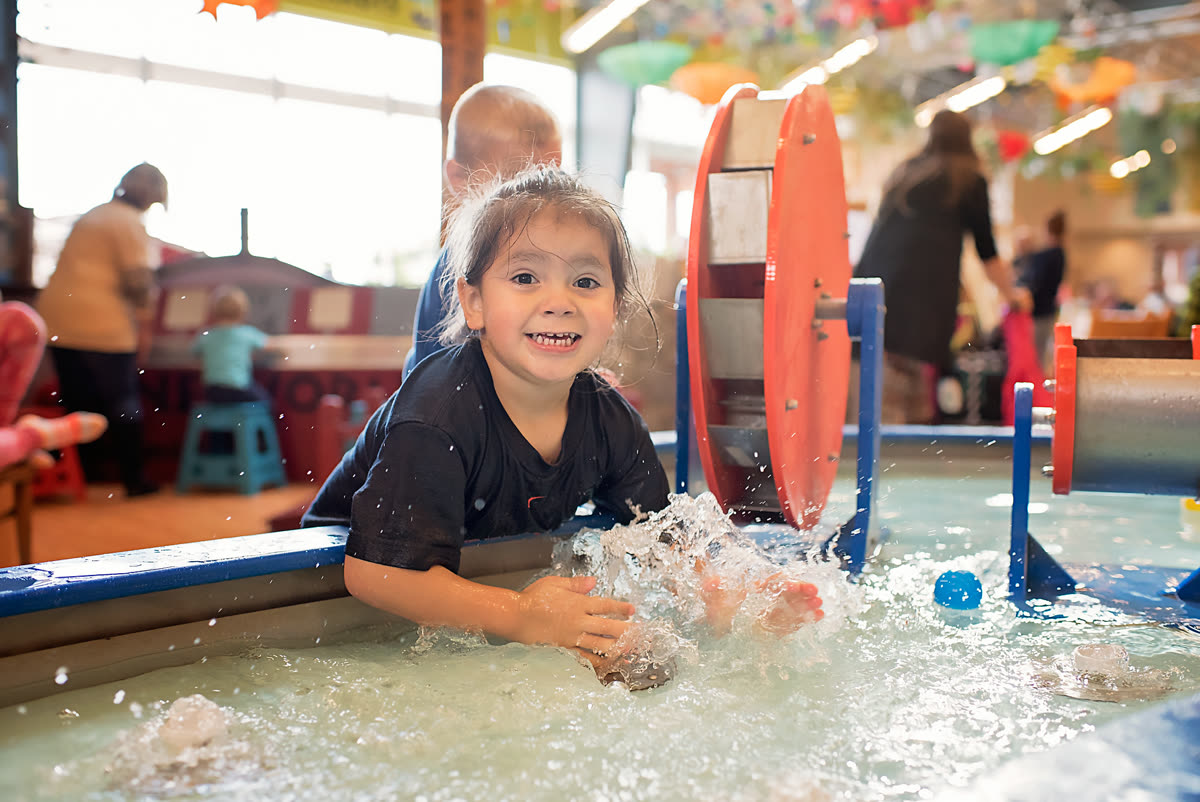
Six big reasons play matters
Play builds the brain's command center
Executive function (attention, working memory, and self-control) develops fastest in early childhood, and playful back-and-forth experiences are how children practice those skills. These capacities predict school success better than early academics alone.
Harvard Center on the Developing ChildPediatricians prescribe it
The American Academy of Pediatrics formally recommends play as essential to healthy development. It feels so strongly about it that it encourages doctors to write "prescriptions for play" at well-child visits. Play also buffers toxic stress and supports caregiver-child bonds.
AAP Clinical Report, Pediatrics (2018)Pretend play stretches thinking
When a child runs a pretend market or delivers pretend mail, they practice language, negotiation, symbolic thinking, and perspective-taking. Developmental psychologists since Vygotsky have observed that in imaginative play, children perform "a head taller" than their everyday selves.
Vygotsky, Mind in Society (1978)Learning happens far beyond the classroom
The National Research Council found that informal environments like museums, libraries, and everyday exploration are powerful engines of science learning. They spark interest and identity ("I'm someone who figures things out!") that classrooms build on.
NRC, Learning Science in Informal Environments (2009)Play is a right, not a luxury
The United Nations Convention on the Rights of the Child recognizes every child's right to play (Article 31). Children's museums help make that right real, especially through access programs like Museums for All discounted admission.
UN CRC, Article 31 · Museums for All / IMLSGrown-ups learn here too
Hands-on museums are one of the few places designed for adults and children to explore together. That "serve and return" interaction (a child shows, a caregiver responds) is one of the most reliable builders of healthy brain architecture we know of.
Harvard Center on the Developing Child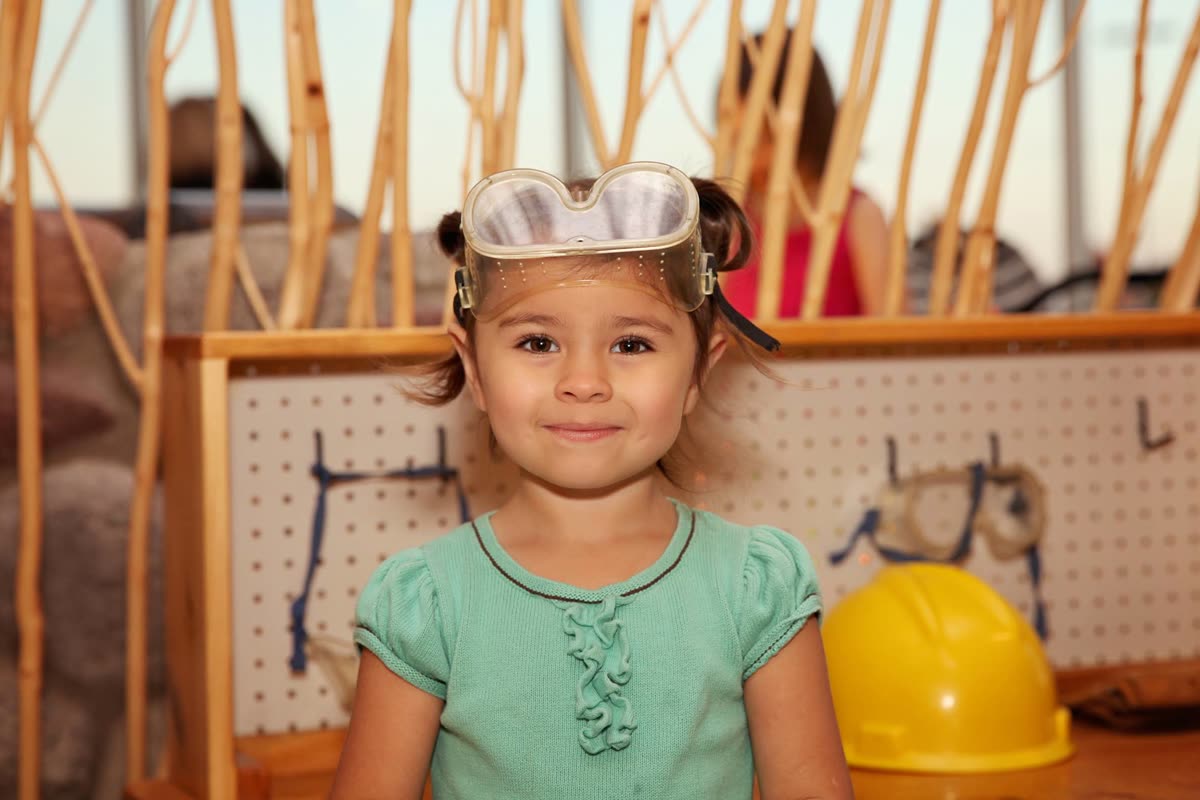
Why a children's museum matters here
Hands-on learning close to home
Mid-Michigan families shouldn't have to drive hours for hands-on learning. The Discovery Museum brings it close to home, and monthly LOCAL reciprocal partners across Michigan add even more places to explore.
Access for every family
Museums for All admission ($4 with EBT/WIC), free Discovery Days, and affordable memberships keep the doors open to everyone.
Built for the early years
Ages 0 to 8 are when brain architecture forms fastest. Those are exactly the years the Discovery Museum serves best.
Community-powered
A 501(c)(3) nonprofit sustained by local sponsors, volunteers, and members. By mid-Michigan, for mid-Michigan.
Come see the research in action
Every day is a field day here. Open 7 days a week, 10 AM to 6 PM.